Red Colored Elegy (1969)
Sekishoku Elegy / 赤色エレジー
Information
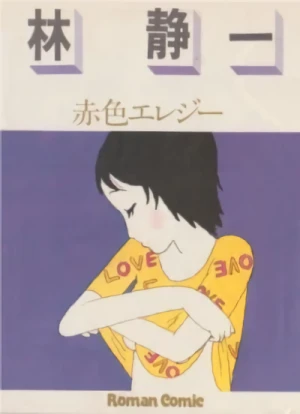
 Sekishoku Elegy 赤色エレジーType: MangaStatus: CompletedPublished: 22.11.1969 ‑ 24.11.1970Volumes / Chapters: 1 / 13Publisher: Seirindou Co., LtdAdapted From: Original Work
 Red Colored ElegyStatus: CompletedPublished: 08.07.2008Volumes / Chapters: 1 / 13Publisher: Drawn & Quarterly
 Elegía RojaStatus: CompletedPublished: 11.2008Volumes / Chapters: 1 / 13Publisher: Ponet Mon
 Elegie en RougeStatus: CompletedPublished: 25.02.2010Volumes / Chapters: 1 / 13Publisher: Éditions Cornélius
 Elegia in RossoStatus: CompletedPublished: 23.07.2016Volumes / Chapters: 1 / ?Publisher: Coconino Press
- Synonyms: Akairo Elegy
Synopsis
Blurb:
Seiichi Hayashi produced Red Colored Elegy between 1970 and 1971, in the aftermath of a politically turbulent and culturally vibrant decade that promised but failed to deliver new possibilities. With a combination of sparse line work and visual codes borrowed from animation and film, the quiet, melancholy lives of a young couple struggling to make ends meet are beautifully captured in this poetic masterpiece. Uninvolved with the political movements of the time, Ichiro and Sachiko hope for something better, but they’re no revolutionaries; their spare time is spent drinking, smoking, daydreaming, and sleeping—together and at times with others. While Ichiro attempts to make a living from his comics, Sachiko’s parents are eager to arrange a marriage for her, but Ichiro doesn’t seem interested. Both in their relationship and at work, Ichiro and Sachiko are unable to say the things they need to say, and like any couple, at times say things to each other that they do not mean, ultimately communicating as much with their body language and what remains unsaid as with words.
Red Colored Elegy is informed as much by underground Japanese comics of the time as it is by the French nouvelle vague, and its cultural referents range from James Dean to Ken Takakura. Its influence in Japan was so great that Morio Agata, a prominent Japanese folk musician and singer/songwriter, debuted with a love song written and named after it.
Source: www.anisearch.com/manga/18055
Seiichi Hayashi produced Red Colored Elegy between 1970 and 1971, in the aftermath of a politically turbulent and culturally vibrant decade that promised but failed to deliver new possibilities. With a combination of sparse line work and visual codes borrowed from animation and film, the quiet, melancholy lives of a young couple struggling to make ends meet are beautifully captured in this poetic masterpiece. Uninvolved with the political movements of the time, Ichiro and Sachiko hope for something better, but they’re no revolutionaries; their spare time is spent drinking, smoking, daydreaming, and sleeping—together and at times with others. While Ichiro attempts to make a living from his comics, Sachiko’s parents are eager to arrange a marriage for her, but Ichiro doesn’t seem interested. Both in their relationship and at work, Ichiro and Sachiko are unable to say the things they need to say, and like any couple, at times say things to each other that they do not mean, ultimately communicating as much with their body language and what remains unsaid as with words.
Red Colored Elegy is informed as much by underground Japanese comics of the time as it is by the French nouvelle vague, and its cultural referents range from James Dean to Ken Takakura. Its influence in Japan was so great that Morio Agata, a prominent Japanese folk musician and singer/songwriter, debuted with a love song written and named after it.
Source: www.anisearch.com/manga/18055
Ratings
Trailers
If you want a good first look at something, there’s hardly anything better than a trailer. We think so, too, which is why we would love to show you an assortment of trailers for the manga “Red Colored Elegy” on this page, if we knew about them. If you’ve already seen one or more trailers for this manga, feel free to enter them into our database, using the entry form.
New Items
 Red Colored Elegy13. March 2018 Show detailsamazon.com
Characters
The centre piece of any manga is its cast of characters that drives the plot and draws the audience into it. Would you like to add the characters for the manga “Red Colored Elegy?” We have a special section for characters and a dedicated team for it, which will help you if the need arises. In our forums you can also find a general tutorial (in German) for entering characters into our database. We’re looking forward to your contributions!
Recommendations


Relations
Knowing which works are related to one another is not only interesting, but also very useful in figuring out in which order one should watch a series or to identify cameos or Easter eggs. If you know which other works the manga “Red Colored Elegy” is related to, then feel free to add them as relations to our database via our entry form.
Forum
Reviews
You thought deeply about the manga “Red Colored Elegy” and now you think it’s time to put these thoughts into words and to do so in a well-structured form? Then now is your chance to be the first to share your review about “Red Colored Elegy” with our community by creating a review thread for it and posting your review there. Use the button below to quickly create the thread!
- Rate
- Bookmark
- Favourite
Ratings
| Overall Rating | My Own Rating |
| Calculated Value3.25 = 65% | Toplist— |
Member Statistics
Recent Ratings
 aniSearchler
Top Contributors
 NatsukiMiwa133 Cookies
 akayafan42 Cookies
 NSO40 Cookies
 Nanaka39 Cookies
 Noa36 Cookies
Newest Manga Reviews
- Absolute Hypnosis in Another World30. Apr 2026 by DexterMorgan
- Tsuihou Sareta Renkinjutsushi-san, Saikyou no Dungeon o Tsukurimasen ka?30. Apr 2026 by DexterMorgan
- There’s No Use Hanging On22. Jun 2025 by xXblueroseswordXx
- Agui Kkot21. Apr 2025 by Darkthing
- Nicola Traveling Around the Demons’ World05. Feb 2025 by midnightsun.manga
Recent Polls
- Which Anime Broke Your Heart the Most?Participants: 303
- What is the best anime couple of all time?Participants: 295
- Which anime elf do you like most?Participants: 452
- Which anime establishment would you want to visit the most?Participants: 307
- How do you prefer watching anime? Tell us about your viewing habits!Participants: 468
Personalized Lists
- Eye technique15 Items by aniSearchler
- Favorite H Authors27 Items by aniSearchler
- Favourites: Anime Movies1 Items by wmucher
- My Top 5: Action Anime5 Items by kamizukichan
- My Top 5: Dramatic Anime5 Items by kamizukichan

Comments